
Description
Your Chopping Board Deserves Better Than a Quick Rinse and a Towel Dry
Most people treat a wooden chopping board like a plastic plate.
They wash it, dry it quickly, leave it lying flat, and wonder why it warps, cracks, or develops a faint smell within a year.
The truth is that wood is a living material, and a well-made wooden board will reward proper care with decades of use — or punish neglect with cracking, staining, and bacterial build-up within months.
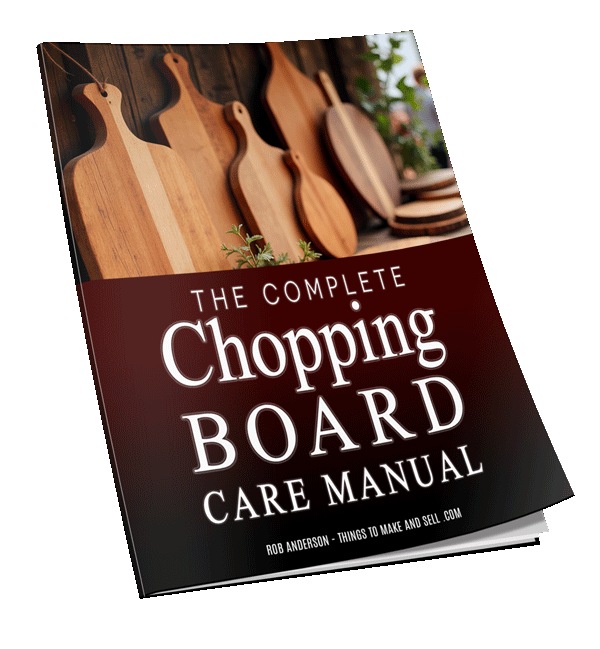
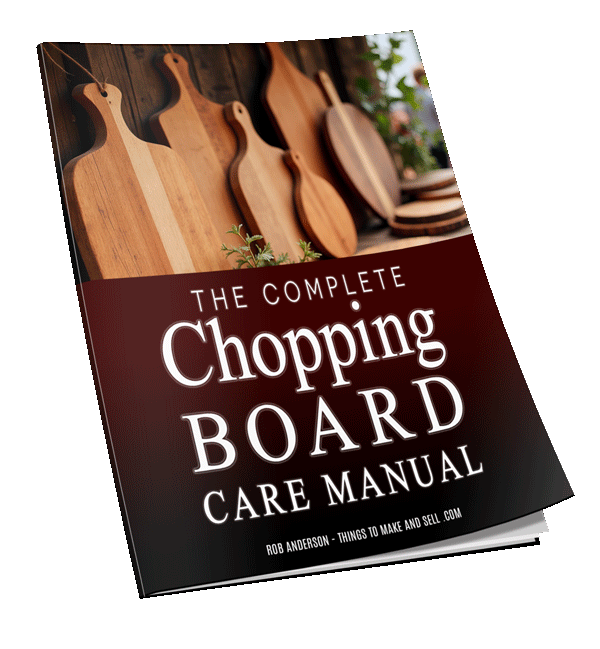
The Complete Chopping Board Care Manual covers every aspect of wooden board care in clear, practical, jargon-free detail.
Written by Rob Anderson of Thingstomakeandsell.com, this is a genuinely thorough reference guide that treats the subject with the seriousness it deserves — from the science of wood pore structures right through to professional-grade finishing techniques you can do at home with minimal equipment.
What’s Inside
Hardwood Selection for Food Safety
Not all wood is equal when it comes to food preparation, and this section explains exactly why.
You’ll learn about the Janka hardness rating system, why tight-grain hardwoods like maple, cherry, and walnut are the right choice for a chopping board, and why softer or open-grain woods create hygiene problems that no amount of cleaning can fully resolve.
A 2022 study cited in this section found that tight-grain woods absorb 30% less bacteria than open-grain alternatives — a finding that matters every time you put a knife to your board.
Pore Structures and Moisture Absorption
This section goes a level deeper into wood anatomy to explain how moisture behaves differently in different types of wood.
You’ll learn to distinguish between ring-porous, diffuse-porous, and semi-ring-porous woods, and understand why this matters for long-term board hygiene.
The simple Water Drop Test taught in this section gives you an immediate, no-equipment way to check whether your board’s protection is still holding up or urgently needs attention.
Natural Disinfection Using Kitchen Staples
Harsh chemical cleaners degrade wood fibers over time, and this section shows you a far better alternative.
You’ll learn the Spray and Sit Method using white vinegar and lemon juice to disinfect and deodorise your board naturally and effectively.
A 2021 study referenced here found that lemon juice reduces persistent wood odors by 85% after handling strong ingredients like garlic and onion — results that rival chemical cleaners without any of the damage.
Drying Procedures to Prevent Warping
This is the step most people get completely wrong, and it’s the one most likely to ruin an otherwise well-maintained board.
The guide explains why a full 24-hour vertical air-drying process is the only method that guarantees even moisture evaporation from both sides of the board.
Laying a board flat to dry traps moisture on the underside, creating the uneven tension that causes warping and structural cracks. Proper drying technique alone can reduce the risk of structural cracking by 60%.
Flood Application for New Boards
A new board that isn’t properly hydrated from the start can shrink by as much as 50% over time as its wood fibers dry out and lose flexibility.
This section teaches the Flood Method — a deep initial treatment using food-grade mineral oil that saturates the wood completely before regular use begins.
You’ll learn exactly how much oil to apply per surface area, how to know when the wood is fully saturated, and why food-grade mineral oil is the only oil you should ever use — and which common alternatives can ruin a board permanently.
Beeswax Barriers for Water Resistance
Mineral oil hydrates the wood from within, but it doesn’t create a surface barrier strong enough to repel heavy food juices and repeated moisture exposure on its own.
This section teaches you how to make your own professional-grade wood butter — a simple two-ingredient blend of food-grade mineral oil and organic beeswax in a 4-to-1 ratio — and how to apply it correctly to create a protective surface seal that lasts three times longer than mineral oil alone.
Full melting temperatures, mixing instructions, and application technique are all covered in detail.
Removing Knife Scars with 220-Grit Paper
Deep knife grooves are more than cosmetic.
They trap food particles and moisture and create exactly the kind of environment where bacteria thrive.
This section introduces the Circular Motion sanding framework using 220-grit sandpaper, which removes approximately 1/64th of an inch of damaged surface wood to reveal a clean, fresh layer beneath.
A 2020 woodworking survey found that boards sanded annually lasted five times longer than those left unsanded — and that 220-grit sanding removes 95% of surface bacteria living in deep knife grooves.
Raising the Grain for Professional Results
This is the finishing step that separates a home-maintained board from one that looks and feels professionally restored.
Most people sand a board smooth and then apply oil — and then wonder why the surface feels rough again after the first wash. This section explains why this happens, and teaches the Pop the Grain technique: a deliberate light misting of the sanded surface to raise the wood fibers, followed by a final fine-grit sanding pass that removes them permanently.
The result is a surface that stays smooth to the touch through repeated washing and use.
Conclusion and Maintenance Action Plan
The guide closes with a concise summary of key principles and a clear, numbered maintenance action plan that you can use as an ongoing reference.
From the monthly mineral oil schedule to the annual sanding check, every step is laid out in a practical sequence that makes long-term board care simple and consistent.
Who This Guide Is For
This manual is written for anyone who owns, uses, or makes quality wooden chopping boards and wants to care for them properly.
It’s ideal for home cooks who want their boards to last decades rather than years, for gift buyers who want to pass useful care information on to the people they’re buying for, and for woodworkers and craft sellers who make and sell chopping boards and want to provide their customers with a genuinely useful care reference alongside their purchase.
The language throughout is clear and accessible — technical concepts are always explained in plain terms, and every technique is described in enough detail to follow without any prior woodworking knowledge.
🎧 Free Audiobook Bonus Included
The audiobook version of this guide is included free with every purchase.
Listen while you oil your boards, work in the workshop, or go about your day — and have the key techniques and reference points ready to hand whenever you need them.
About the Author
Rob Anderson is the owner of Thingstomakeandsell.com and a long-standing resource for craft sellers, makers, and small business owners.
Alongside practical guides like this one, he offers a free keyword research training course, done-for-you keyword bundles, and done-for-you self-hosted WordPress websites for sellers who are ready to build a serious online business.
Purchase today and get instant access to the PDF guide plus your free audiobook bonus.




Reviews
There are no reviews yet.